One Hour Design Competition at Core77

This is awesome:

We’re inviting designers to create the most number of ideation sketches, on any subject, in 60 minutes.

The creaky gears inside my headMy only gripe is that they’re not really giving you a specific problem to solve:  “If you love shoes, sketch ‘em. If you’re feelin’ it for cars, we want to see those. If you’re into cellphones, gadgets, gizmos, fashion, or accessories, have at it!"

Call me lazy, but I don’t really start getting ideas until someone sets me up with a specific challenge.  That’s probably what makes me a designer and not an artist (and I feel a little silly even calling myself that).

UX Week Discount

Hi folks,

Just wanted to pass along news about a deal on UX Week, now through July 5th.  I thought some of you might be interested.

xo Leah

UX Week Special Extended Through Sunday, July 12th
In honor of Independence Day we’re offering UX Week registration for $1,776 through July 12th (regular price $2,495)

Use the code FOLB and get an additional 15% off that.

Go! Register! UX Week is going to be awesome. We promise.
http://www.uxweek.com/


What tools do you use to sketch?

I wrote an article a few weeks ago for the Adaptive Path newsletter about the tools I use for design-related sketching.

My sketching toolkit

Imagine my delight to see other people now sharing their favorite sketching tools. Some cool additions to the toolkit:

Manga pens (from Jackson Fox)

11x17 graph paper (from Beck Tench)

Exacto knife qua pencil sharpener (from Michael Angeles)

Beck Tench also has a tip I love, which is:

"The first thing I do in a sketchbook is go through each page and number it w/ a soft pencil.  This helps me reference and later find a specific sketch and also gives me a nice sense of progression as I sketch my way through a book."

So, what do you use? Tell, oh tell!

Off to SXSW tomorrow and IA Summit next week. Drop me a line if you’ll be at either one. Let the conference season begin!

Burndowns and Flareups in Agile Design

Warning to my sisters and my aunties: this is about work. Feel free to read past. User experience aficionados, read on…

It’s a rare and special moment when life hands you a new first. I had one just a few weeks ago, when I found myself on my first panel discussion. It was at a gathering of software product managers who use Scrum, an Agile software development approach.

Here’s what I learned: when speaking on a panel, you never know what question you’re going to get next. That makes each one feel a bit like the pop-up that gave me a black eye the last time I tried to play softball. I could see it coming; it appeared to be slow and easy. But alas, I just couldn’t land it in my mitt.

Normally I love to spout off. To an audience? Even better. But this was a little different, because I’m sensitive to the way that the Agile and UX communities talk and think about each other, and, frankly, because the questions coming from the audience were so very specific about how to run an Agile project. So I was kind of shy. I did a fairly good job dodging questions until someone threw a zinger aimed straight for me…

"How do UX people measure burndown?"

Crack. Swish. Thud. No answer.

Burndown ChartBurndown, in case you’re wondering, is basically a measurement of how quickly the team is doing the work. Each day, everyone gives an estimate of how many hours of work they have left, and the estimates are all added up, and that’s the burndown, or velocity, of the work. If you measure this regularly, you should see a steady and precipitous drop, steep and to the right. That’s a healthy project. Because Agile evolved as an antidote to slow, unfathomably-difficult-to-predict waterfall projects, knowing that things are progressing at a brisk pace and that the work is actually likely to finish when predicted is understandably important.

But I have to say, the question stumped me. Part of me wanted to quickly manufacture a way to actually measure UX burndown, to show that us UX folks can play nicely. But another part of me — the rude, argumentative part — wanted to say, “that’s not the point!"

Flareups, not burndowns

I’ve thought more about this since then, and here’s my beef: where UX design really has the most to offer Agile is not in getting the nitty gritty design work done. Placing the buttons and aligning the labels must be done just as surely as dotting your I’s and crossing your T’s. But that’s not the high value UX work.

No, what UX designers offer that’s special is help building a vision for what the product can and should be. This is not a reductive “getting things done" approach. It’s a generative “what does this have the potential to be" kind of approach. A good UX designer should encourage the team to ask that question, facilitate a process that brings the whole team along in answering it, and then make those answers tangible, doable, and, yes, a little bit pretty. (Jeff Patton, who is one of the strongest and most coherent voices for Agile + UX unity, has more to say on the importance of the designer as facilitator over on his blog, Agile Product Design.) Basically, I’m talking about the opposite of a burndown. Dare I say it? A design flareup!

Sprinting with design

That’s not to suggest that design must equal bloat. In fact, at Adaptive Path we have some ideas that we’ll be sharing in our upcoming two-day workshop Good Design Faster for how to make design as lean, swift, and results-oriented as Agile. Much like Agile development, our take on design sprints includes short, fixed periods of productive abundance and a “finished" product at the end — in our case an interactive prototype. (You can find out more if you’re interested, and register with the code “FOLB" to save 15%.)

Design Sprints

I do believe that Agile and UX can find a way to work peaceably and productively together. In fact, many teams are doing so already. But we haven’t gotten very good at sharing the hows and the whys with folks in the Agile community yet. It’s time. If you’re doing interesting work with Agile teams as a UX designer, please consider submitting to Agile 2009, so we can all learn from each other.

Caught red handed

No Trespassing

PO Boxes

Bush

The Crime

I was in an old post office in central Indiana today snapping these pictures with my phone when a mustachioed man approached me and said in a stern voice, “Excuse me."

"Oh, I’m sorry," I said, and shuffled a few feet over, assuming I was blocking him. “No, EXCUSE ME," he said. “I’ve been watching you. It is illegal to take pictures in this building. This is a government building. You can’t take pictures here."

My Response

Some things that went through my head in quick succession…

  • "Wow, that’s a tidy mustache."
  • "Is he going to confiscate my iphone?"
  • "Do I have to destroy the photos?"
  • "How do I convince him I’m not doing anything wrong?"
  • "I feel so guilty."

I tried to smile and apologize and say that I didn’t know, which only seemed to make him want to talk about it more. This was the last thing I wanted to do, because I felt mortified, jittery, and liable to cry.

What’s My Deal?

Is this just nascent, genetic Catholic guilt making me feel so wrong and naughty? Was I really doing something unacceptable? Whatever it was, I felt instantly, profoundly wrotten. Like I didn’t belong there. In that post office. In that town. In the whole damn state, really. I’m sure this could have happened just as easily in a public building in San Francisco, but I think because in my photo-taking I’d been making subtle, private commentary on the otherness of it all, my encounter with the Mr. Mustache made me feel resentful, out of place, and also kind of like a jerk. All kinds of awesome feelings. The whole thing just made me want to float away and dissolve in the atmosphere.

Sorry, Blog.

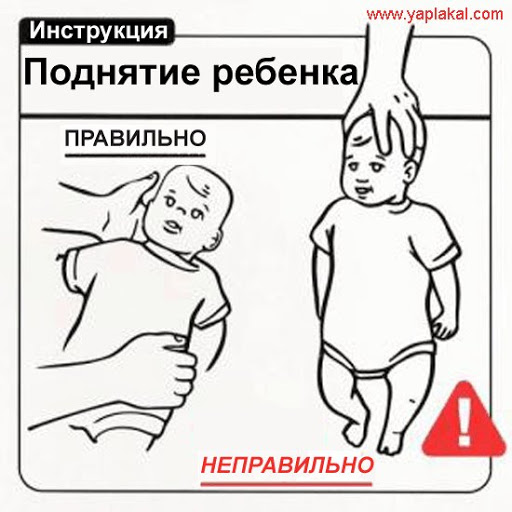
I know I’ve been neglecting you. It’s been a busy month. I’ve thought of you, from time to time, with your stale, flip joke about a baby being lifted by its head. That’s no way to leave things with you. Blog, you deserve more from me. Baby, I’ll never neglect you again. Yes, naturally you wonder what I’ve been up to. What can I say?

This and that…


A trip to Denmark

Nearly killed myself for a virtual seminar


Rode a horse for the first time

Off to New York this week for Thanksgiving break. I’ll tell you all about it. I promise.

Buleyesque

One of my heroes just turned me into a neologism. That’s right! Buleyesque. Meaning, I think, kinda hand-drawn looking. This is a good day.

By the way, yes, I realize that it’s ridiculous to introduce to the world a new word meaning “kinda hand-drawn looking" in Edwardian Script, but damnit, a fancy word calls for a fancy font!

What is interaction design?

Jonas Löwgren have a really lovely description of interaction design in a discussion currently underway over on the IXDA discussion list.

The gist is, good interaction designers “sketch" out interactivity (often by making interactive prototypes), and they think about aesthetics. Or, to put it another way…

Formula for what makes a good interaction designer

I’m not actually sure if I agree, but I like the focus on making things that demonstrate the interactive stuff, and also the understanding that how it looks matters.

The problem is, by this definition, a lot of the interaction designers that I know are not that “good." Many of them don’t have a very sophisticated aesthetic sensibility. And even more of them don’t regularly sketch out their ideas in a form that’s interactive. (They fall back on static wireframes and then use their words to try to create that sense of interactivity instead.)  And of course, by they I mean me.

So maybe I’ll take this as a challenge. Start getting dirty with the concept of clickable sketching. And also, uh, get more, um, aesthetic? Yikes, I think I need to take some typography and color theory classes.

The many uses of Wordle

Not long ago some folks at my office got excited about Wordle, a tool for making word clouds. You put in the text. Out comes a word cloud.

One smarty pants at work used it to analyze her own writing for bullshit corporate words. You know, “utilize," “collaborate," “synergies." Damn words. They creep into my diary, my thoughts, my dreams.

Another person used it to analyze card sort results, actually. Very clever. We had a client who kept arguing for “professional" sounding labels rather than intuitive ones. Wordle demonstrated rather irrefutably that the professional labels were not obvious choices for people.

And here, in this Pew Research Center survey on words used to describe the U.S. presidential candidates, clearly Wordle works its magic again.

Wordle word cloud

Except this time it sorta makes me sad. I don’t want the biggest word next to Barack Obama to be “inexperienced."  “Change," “intelligent," “hope," those words are pretty alright.  Real small, in blue, on the right, I see “socialist."  What the hell?